

Augmentative & Alternative Communication (AAC)
AAC helps people communicate using tools, strategies and technologies that support or replace speech. This may include communication books, apps, speech‑generating devices, symbols, or alternative access methods such as switches and eye gaze.
AAC can support people of all ages to express their needs, share ideas, build relationships and participate more fully in everyday life.
What is AAC?
AAC stands for Augmentative and Alternative Communication. It includes any method that helps a person communicate when speech is difficult, limited or not possible.
If you’d like a simple overview of assistive technology more broadly, visit Assistive Technology Explained.
AAC can be:
-
Low‑tech - communication boards, books, symbols, keyrings
-
Mid‑tech - simple voice output devices
-
High‑tech - communication apps and speech‑generating devices
-
Alternative access - switches, eye gaze, joysticks, head tracking
AAC does not stop someone from learning to speak. It supports communication while building confidence, language and independence.
Types of AAC
AAC includes a wide range of tools and strategies that support or replace speech. These tools are often grouped into two main categories: low‑tech AAC and high‑tech AAC.
Low‑tech AAC tools do not require batteries or electronics. They are simple, flexible and easy to customise.

'About Me' Books'
These books share important information about a person - their likes, dislikes, routines, communication preferences and the people in their life. They help others get to know the person and support positive interactions.

Visual Schedules
Visual schedules use pictures or words to show daily activities or steps in a task. They help people understand routines, stay organised and move through activities with confidence.
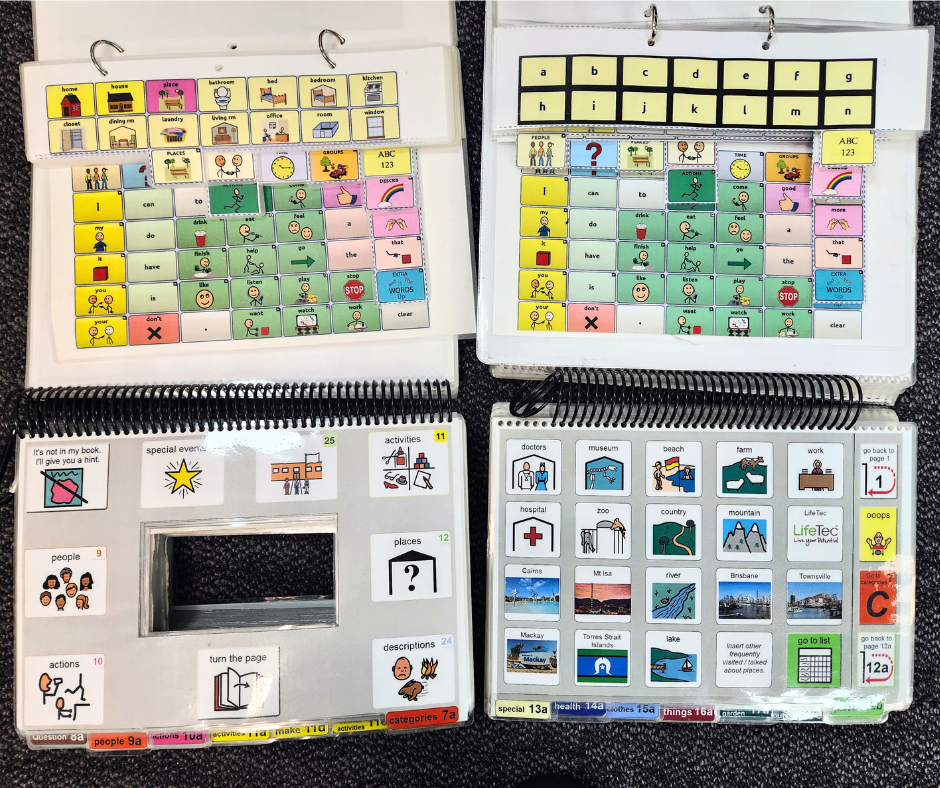
Communication Books and Boards
These tools use pictures, symbols or words that a person can point to in order to communicate.
Communication books can include multiple pages organised by topic.
PODD books are one example of a structured low‑tech communication system.High‑tech AAC includes electronic communication systems such as apps, tablets and speech‑generating devices. These tools can offer:
-
customisable vocabulary
-
voice output
-
multiple access methods (touch, switch, eye gaze, etc.)
-
the ability to store and retrieve messages
-
options for text‑based or symbol‑based communication

Static Display Devices
These devices use printed symbol overlays. Pressing a symbol plays a recorded message. They are useful for people learning choice‑making or who prefer simple, consistent layouts.

Dynamic Display Devices
These devices have touchscreens with multiple pages of vocabulary. Selecting a symbol or word can open new pages or speak a message aloud.

Text-based Systems
People type their message, and the device speaks it aloud. These systems are helpful for people with strong literacy skills and may include features like word prediction or stored phrases.

Symbol-based Systems
These systems use symbols or pictures to represent words and concepts. They support people who communicate visually or who benefit from structured symbol‑based language systems.
-


Who AAC Is For
AAC can support people who:
-
have difficulty speaking or being understood
-
use limited or no speech
-
have changing or progressive communication needs
-
have acquired communication difficulties
-
want more reliable or independent ways to communicate
AAC can help children, adults and older people across many communication needs.
How We Can Help
We support people to explore, trial and use AAC tools that fit their goals and daily life. Our services include:
-
AAC assessments
-
Device trials and demonstrations
-
Support with communication apps
-
Training for families and support teams
-
Alternative access assessments
-
Funding recommendations
-
Ongoing support to build confidence
Our AAC Assessment Process
1. Understanding your communication needs
We learn about your goals, strengths, challenges and daily communication environments.
2. Exploring AAC options
We look at a range of low‑tech and high‑tech AAC tools, including communication apps and speech‑generating devices.
We can also explore alternative access options (such as switches, eye gaze, head tracking or voice control) if needed. Learn more about Alternative Access.
3. Hands‑on trials
You can try different AAC systems to see what feels comfortable and effective.
4. Recommendations
We provide clear, unbiased recommendations to support your next steps, including NDIS or funding applications. Learn more about NDIS funding.
5. Training & support
We offer training for individuals, families, carers and support teams to help you get the most out of your AAC system.
AAC Mentoring, Training & Workshops
We offer mentoring and training services for professionals, families and students to build confidence and skills in Augmentative and Alternative Communication (AAC).
Our senior speech pathologist brings extensive experience in mentoring, teaching and supporting others to understand and use AAC effectively in everyday communication.
Professional Mentoring
Are you a Speech Pathologist looking to upskill in AAC assessment, prescription, and device implementation? We provide one-on-one or group mentoring to help you feel more confident supporting clients with complex communication needs.
Family & Support Staff Education
Already have a AAC device but not sure how to get the most out of it? We can guide you and your support network through hands-on sessions to ensure everyone feels comfortable and capable using the device in daily life.
University Workshops & Private Training
We regularly collaborate with universities to deliver engaging AAC workshops for Speech Pathology students and can provide tailored training sessions or seminars for teams and organisations upon request.
Who We Support

NDIS participants & people with disability

CHSP clients & people ageing at home

Carers & families

Support coordinators

Allied health professionals

Community organisations
How Our Process Works
Our service process follows LifeTec's IMAGINE SEEK CHOOSE LIVE pathway—helping you explore possibilities, find the right solutions, and live with confidence.

The IMAGINE SEEK CHOOSE LIVE pathway puts you in control of your assistive technology journey. Our team works with people of all ages and abilities through this evidence‑informed approach to ensure you are well supported and informed at every step.
Your Journey With Us
At LifeTec, we make it simple to get the Assistive Technology support your need.
Here's what to expect when working with us:

Initial Consultation

Assessment

Trial and Compare Options

Recommendation and Funding Application

Set up and Implementation

Review
Frequently asked questions
Why Choose LifeTec?
Over 47 years supporting Queenslanders
Skilled speech pathologists with extensive AAC experience
Registered NDIS provider
Strong local knowledge and collaborative approach
Practical, person‑centred recommendations